
Búðir Black Church (Búðakirkja)
Discover Búðir Black Church on the Snæfellsnes Peninsula, from its 18th-century origins and black timber exterior to nearby lava fields and coastal scenery.
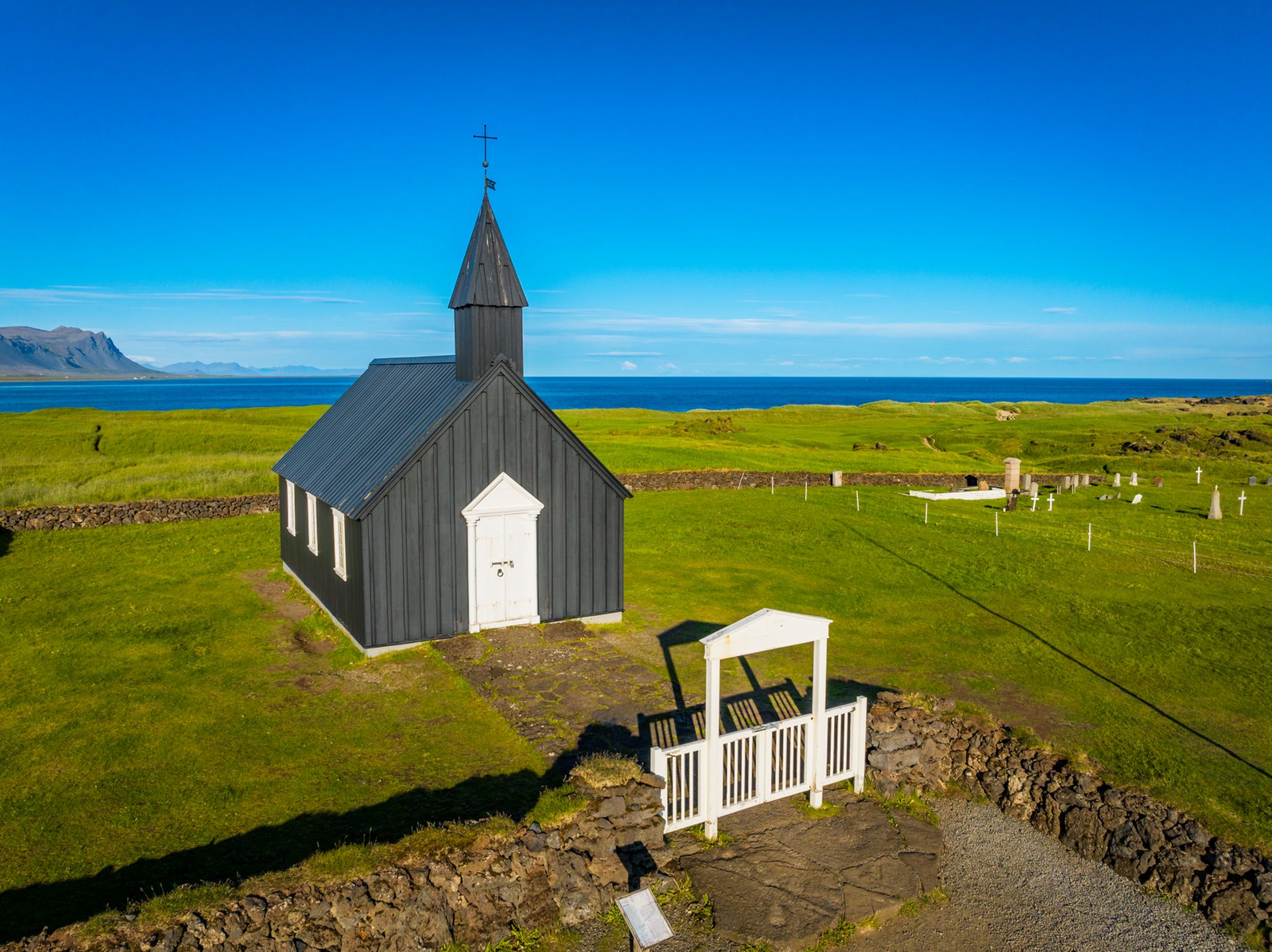
Búðir Black Church, or Búðakirkja, is a small black wooden church on the southern Snæfellsnes Peninsula. It is surrounded by lava fields, mountains, and the coast, and is one of the most photographed landmarks in the area. The church is also known for its history, which dates back to the early 1700s.
What Is the Búðir Black Church?
Lying near the Búðahraun lava field and the coast, Búðakirkja is a small wooden church in the settlement of Búðir. The present church was built in 1848 and is especially recognisable for its pitch-black timber façade.
Though remote, the black church of Búðir remains an active parish church, used for religious services, weddings, and other events. The area was once an important trade hub and fishing settlement on Snæfellsnes. Today, it is known primarily for its scenery, historic church, and nearby Hótel Búðir.
The History of Búðakirkja
The site’s religious history stretches back to the early 18th century. The first church erected here in 1703 was a small turf church. By the early 19th century, its condition had deteriorated so badly that it was officially abolished by royal letter in 1816.
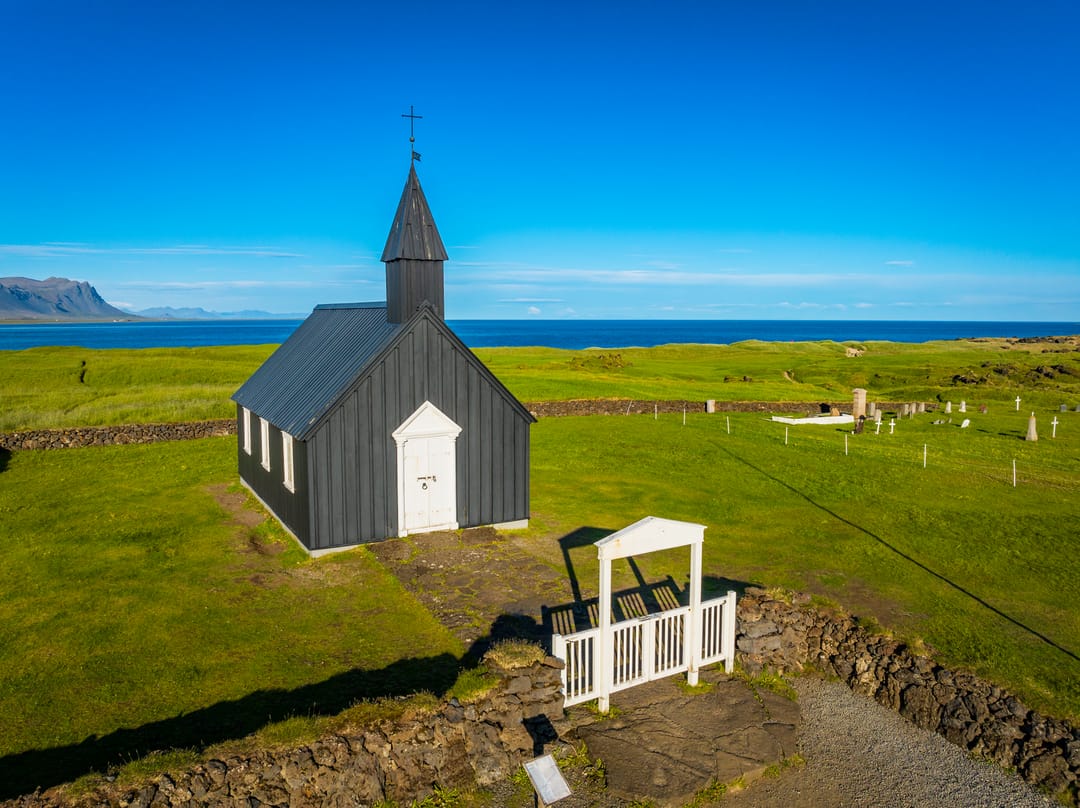
Steinunn Sveinsdóttir later fought to rebuild it, personally financing and leading the project. The black church that stands today was completed in 1848 and consecrated in 1851. There were several alterations over the decades. A major reconstruction in 1987 returned the church to an appearance closely resembling its original 1848 form. Historical treasures inside include two church bells dating from 1672 and 1702, alongside a Danish altarpiece from 1750.
Why Is Búðir Black Church So Photogenic?
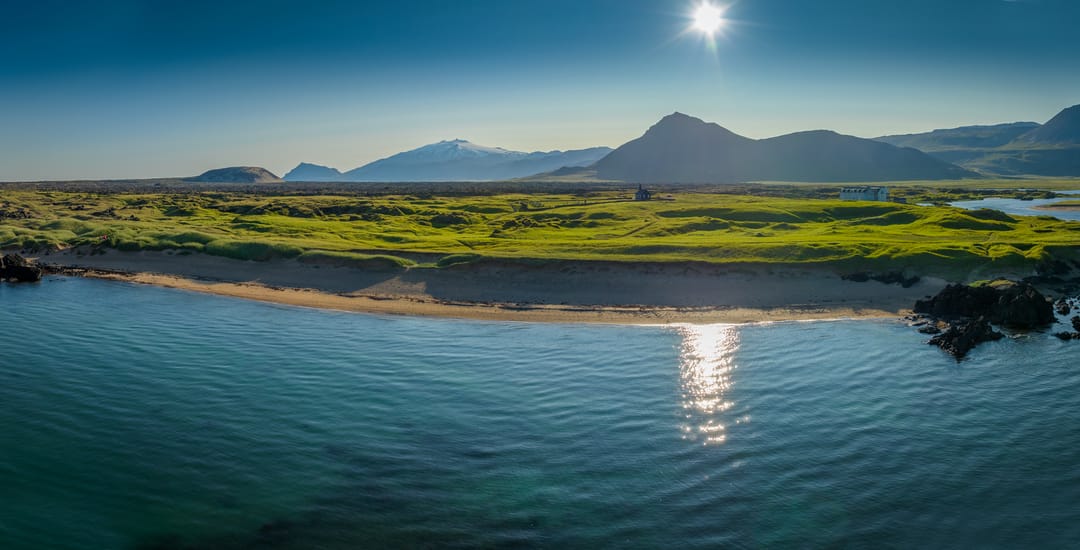
The church’s popularity among photographers largely comes down to contrast and composition. Its dark exterior stands out against bright summer moss, winter snow, or moody skies. Low stone walls border the churchyard, with volcanic terrain stretching beyond. On clear days, the white ice cap of Snæfellsjökull Glacier can even appear in the background.
While taking photos, keep in mind that Búðakirkja is a consecrated church with a historic cemetery. Visitors should stay on marked paths, respect ongoing ceremonies, and avoid disturbing graves.
How to Get to Búðir Black Church
Búðir Black Church is straightforward to reach as part of a Snæfellsnes day trip or longer stay. It sits on the southern Snæfellsnes Peninsula, roughly 175 km (108 mi) from Reykjavík. In good conditions, the drive takes around 2.5 hours. Follow Route 54 west, then turn onto Route 574 towards Arnarstapi before taking the signposted Búðavegur turn-off for Búðir. Parking is available close to the church and Hótel Búðir.
What to See Near Búðakirkja
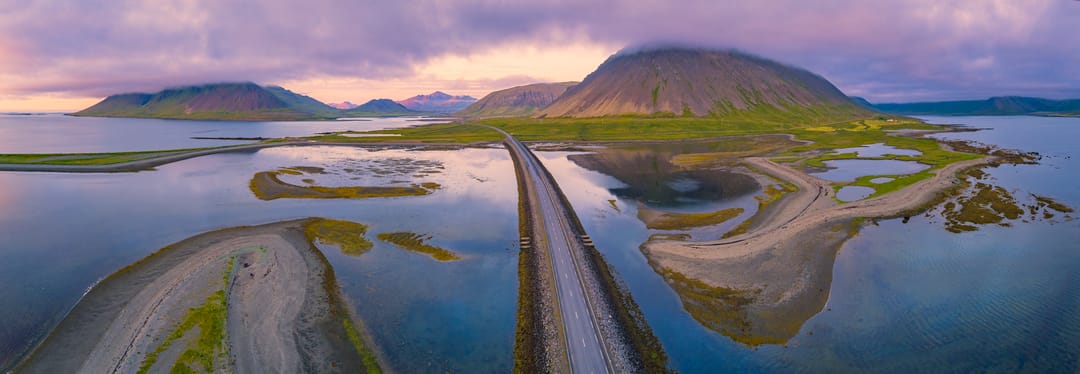
Many visitors spend around 15 to 30 minutes at Búðir Black Church. After taking photos and exploring the churchyard, continue to the natural wonders along the southern and western Snæfellsnes Peninsula.
- Rauðfeldsgjá Gorge: A narrow ravine cutting deep into the mountainside, with a short walking trail leading towards its mossy entrance and rocky interior.
- Ytri Tunga Beach: A pale, golden-sand beach best known for its seal colony. Harbour and grey seals are often seen resting on rocks offshore.
- Arnarstapi: A small coastal village surrounded by sea cliffs, basalt formations, natural arches, and scenic walking paths along the shoreline.
- Hellissandur: A historic fishing community on the peninsula’s northern side. It’s now especially well known for its colourful outdoor murals and street art.
- Snæfellsjökull National Park: A protected volcanic landscape surrounding Snæfellsjökull Glacier, with lava fields, craters, rugged coastline, and several popular hiking and sightseeing stops.
Travellers intrigued by the volcanic landscape around Búðahraun can learn more at Perlan’s Forces of Nature exhibition in Reykjavík. Its interactive displays explore Iceland’s earthquakes, volcanic eruptions, and geothermal energy in depth.
FAQs
Yes. Its distinctive architecture, historic character, and dramatic surroundings make it a popular stop on any Snæfellsnes Peninsula itinerary.
Its timber exterior is coated in pitch, a traditional protective treatment used to help shield wood from Iceland’s harsh, wet weather. The dark finish also gives Búðakirkja its distinctive appearance.
Búðakirkja does not have regular daily opening hours. Anyone hoping to visit the interior outside advertised activities should contact the churchkeeper in advance.
Most visitors spend around 15 to 30 minutes taking photographs, walking around the churchyard, and enjoying the surrounding scenery.
You can follow marked trails through Búðahraun, stop for a meal at Hótel Búðir, or continue to nearby attractions.
Popular articles
The Complete Guide to the Northern Lights in Iceland
Learn how the Northern Lights form, where to see them in Iceland, how to prepare, take photos, read the forecast, and improve your chances of a sighting.
Let's Talk About the Volcano in Iceland About to Erupt
Is a volcano in Iceland about to erupt? Here’s what travelers should know about Svartsengi, Reykjanes activity, flights, safety, and the Blue Lagoon.
Solar Eclipse 2026 in Iceland | What Happened
Iceland experienced a total solar eclipse on August 12, 2026. Discover what happened in Reykjavík, eclipse times, totality locations and more.
September 2026 updates on the Sundhnúkagígar Eruption in the Reykjanes Peninsula!
The current eruption in the Reykjanes Peninsula, is called Sundhnúkagígar Crater Row. See insights on the seismic activity and volcanic eruptions in the area!
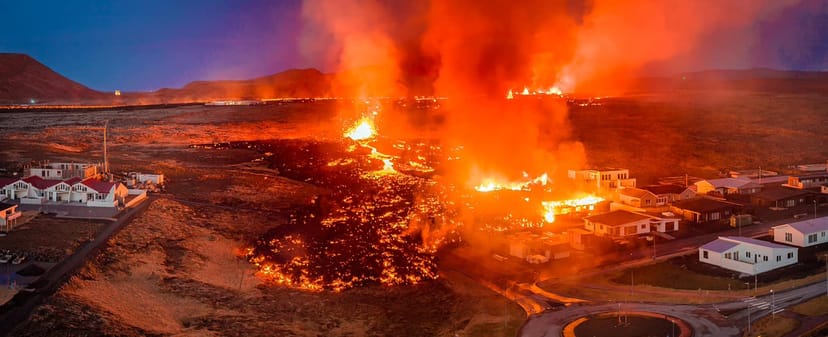
Active Volcanoes in Iceland 2026
Active volcanoes aren't the same thing as active eruptions. A volcano can be considered active even when it is not ejecting ash, rock, gases and magma, so which are active in Iceland in 2026?
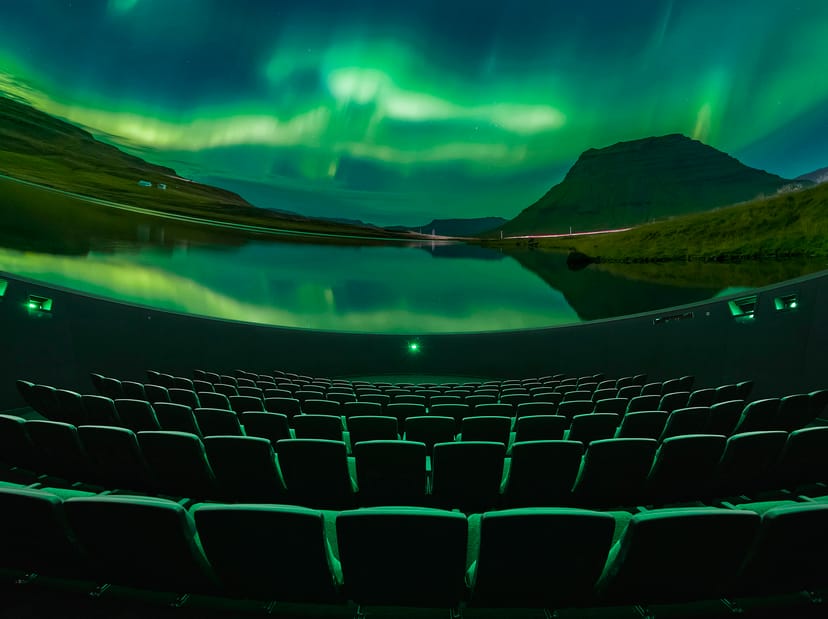
Top 10 Places To See the Northern Lights in Iceland
Discover the best places to see the Northern Lights in Iceland, from Jökulsárlón and Kirkjufell to Reykjavík, Þingvellir and North Iceland.
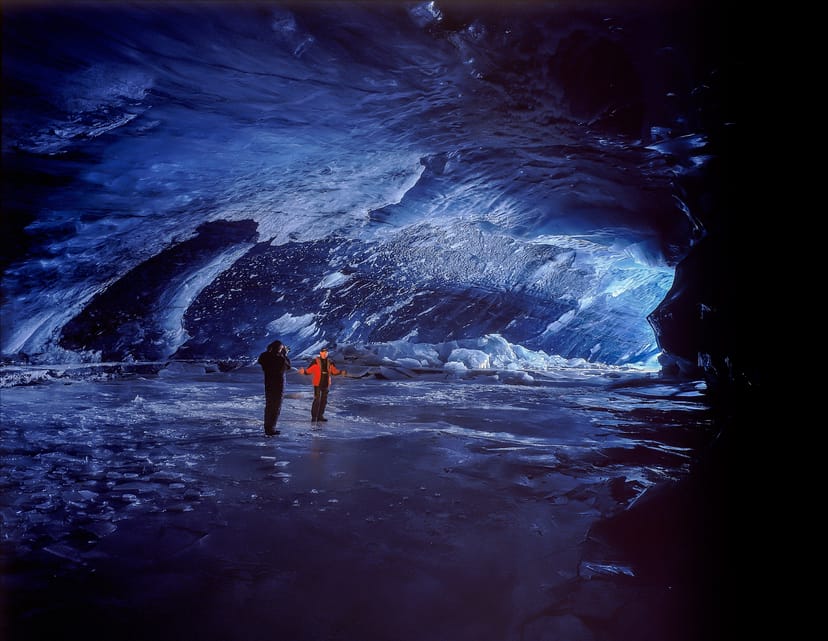
Ice Caves From Reykjavik
Planning an ice cave trip from Reykjavik? Compare Katla, Langjökull and Vatnajökull, travel times, seasons and Perlan’s ice cave in the city.