
Dyrfjöll Mountain Range
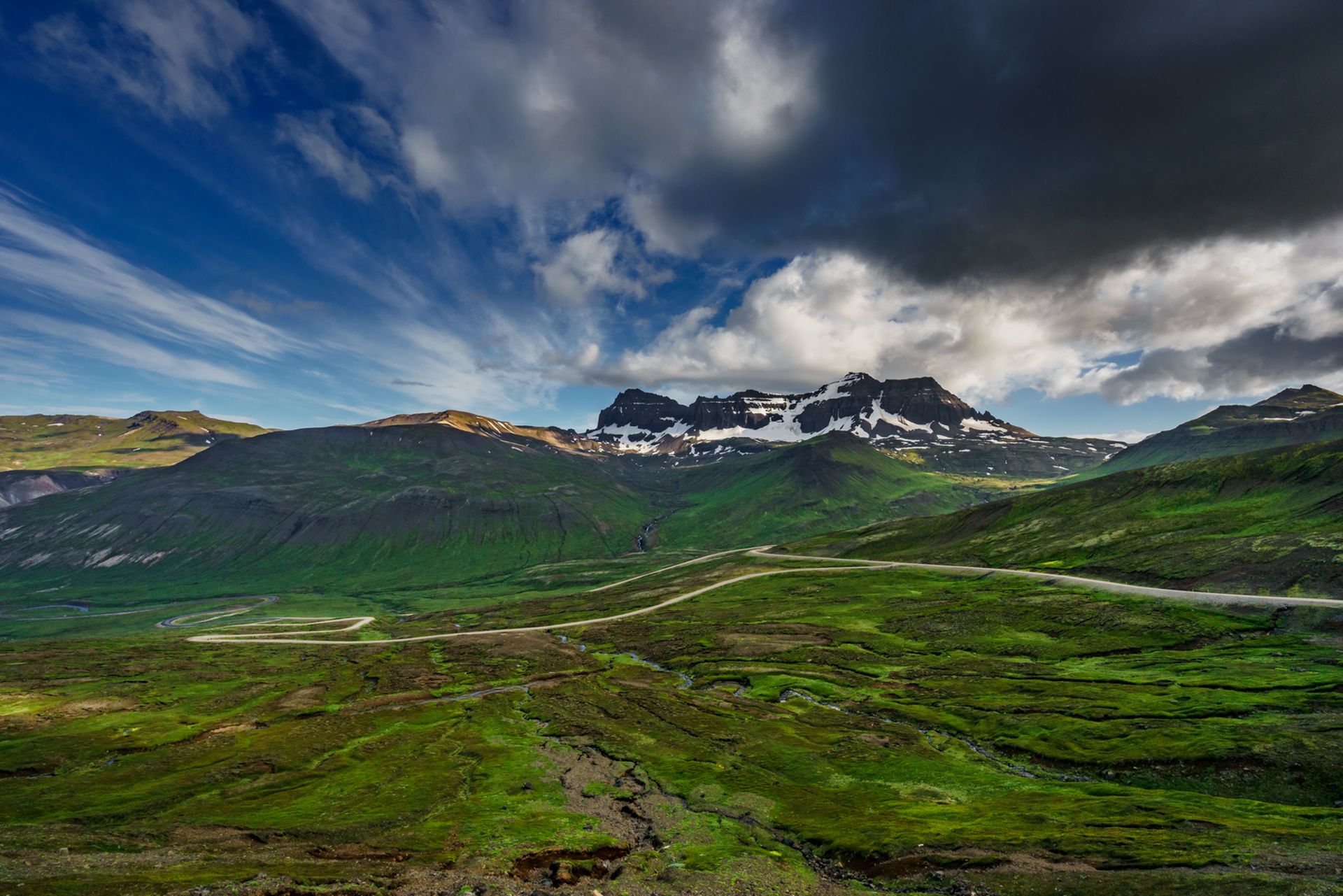
Rising like a jagged wall above East Iceland’s coast, Dyrfjöll separates the region’s lush inland valleys from the fjord of Borgarfjörður Eystri.
This impressive mountain range is instantly recognisable by the massive, door-like gap carved into its sweeping ridge. It’s a feature so distinctive that it even gave the peaks their name, Dyrfjöll or literally “Door Mountains.” A fitting name; Dyrfjöll forms the gateway to spectacular wilderness hikes, most famously the trail to the otherworldly oasis of Stórurð.
How to Get to the Dyrfjöll Mountain Range
The Dyrfjöll range is located in East Iceland, with its hiking access points along Route 94. The nearest principal town is Egilsstaðir. From there, you’ll drive roughly 45 miles (70 kilometres) toward Borgarfjörður Eystri. Two of the main trails start (at the pass of Vatnsskarð and at Njarðvík) sit right off Route 94. From these trailheads, hikers can set off into the striking terrain of the Dyrfjöll mountains.
The Geology of Dyrfjöll and Local Legends
The dramatic face of Dyrfjöll shows the rim of an ancient volcano that went through several phases of eruption and was finally covered by younger eruptives and buried deep down in the crust. During the Ice Age, glacial erosion uncovered the ancient volcano and sculpted the ridge, carving away the softer part of the mountain and leaving the famous door-shaped gap.
Legend paints a more mystical picture of these toothy mountain ridges. Locals say that Dyrfjöll is the home of the Elf Queen of Iceland (Borghildur), with Borgarfjörður Eystri serving as her royal city, Álfaborg. These mountains are also said to harbour trolls and mythical beings, including, some say, the troll Grýla and the Yule Lads.
Learn more about the origins of Icelandic landscapes at Reykjavík’s Perlan Museum. The Forces of Nature exhibition lets visitors experience volcanoes, geothermal power, and glaciers through interactive displays.
Hiking in Dyrfjöll
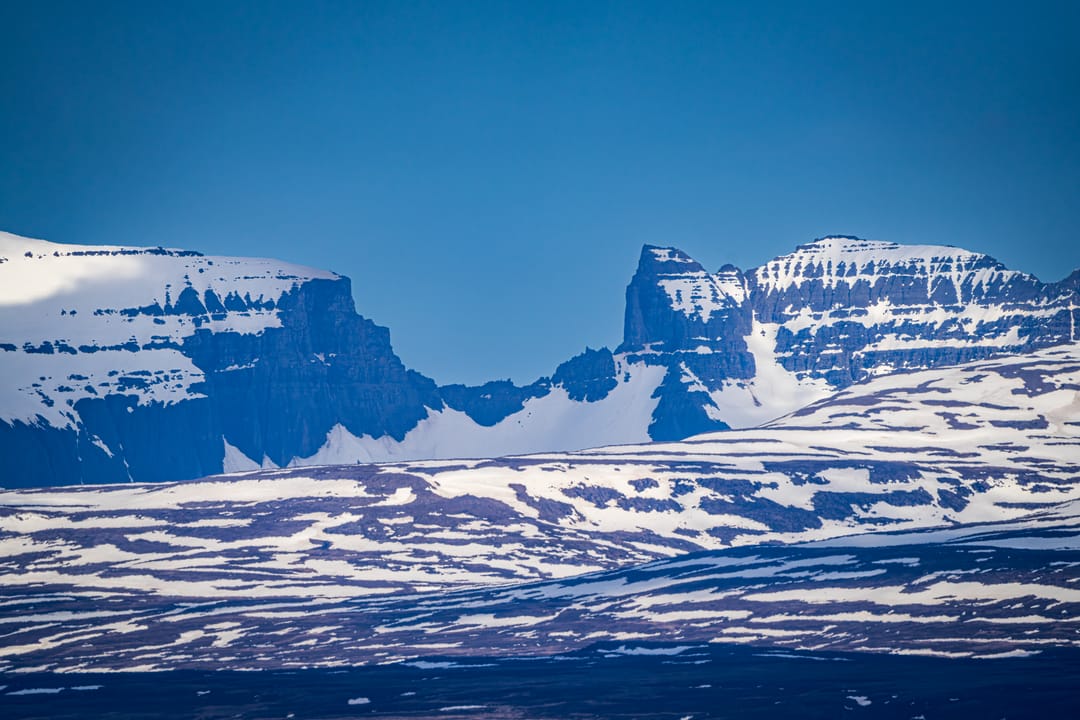
With its highest peak at 3,727 feet (1,136 meters), the sheer vertical walls of Dyrfjöll make for an extremely challenging hike.
The Main Hike to Stórurð (The Giant Boulders)
For most travellers, the essential Dyrfjöll experience is the hike to Stórurð, an otherworldly valley lying beneath the cliffs. The route begins at the Vatnsskarð Mountain parking area, climbing gradually before dropping into the valley.
The path passes wildflower meadows and sweeping vistas of Héraðsflói Bay and Dyrfjalladalur Valley. Finally, you’ll descend into Stórurð, a hidden wonderland of moss-covered boulders, turquoise ponds, and luminous green meadows. Geologically, Stórurð is a huge rockslide with huge blocks of rock. It’s around 2.5 to 3 hours each way under fair weather.
The Dyrfjöll Summit Hike
The climb starts from the Vatnsskarð pass, sharing the route to Stórurð before turning toward the main ridge. The ascent begins from the Vatnsskarð mountain pass, following the same approach towards Stórurð before veering toward the main ridge. From here, the path steepens sharply.
The journey takes around five to seven hours round-trip with good conditions. The payoff is worth it: an unbroken panorama of the Eastfjords, the blue sweep of Héraðsflói Bay, and the wild uplands stretching inland.
Best Time to Visit Dyrfjöll
The optimal time for hiking in the Dyrfjöll area is during summer, from late June through early September. It’s the safest choice: warmest weather, best trail conditions, and minimal snow. In spring or late autumn, conditions become much more challenging with icy trails, reduced daylight, rapidly changing weather, and road closures.
Nearby Attractions: Borgarfjörður Eystri, Seyðisfjörður, and Eastfjords Villages
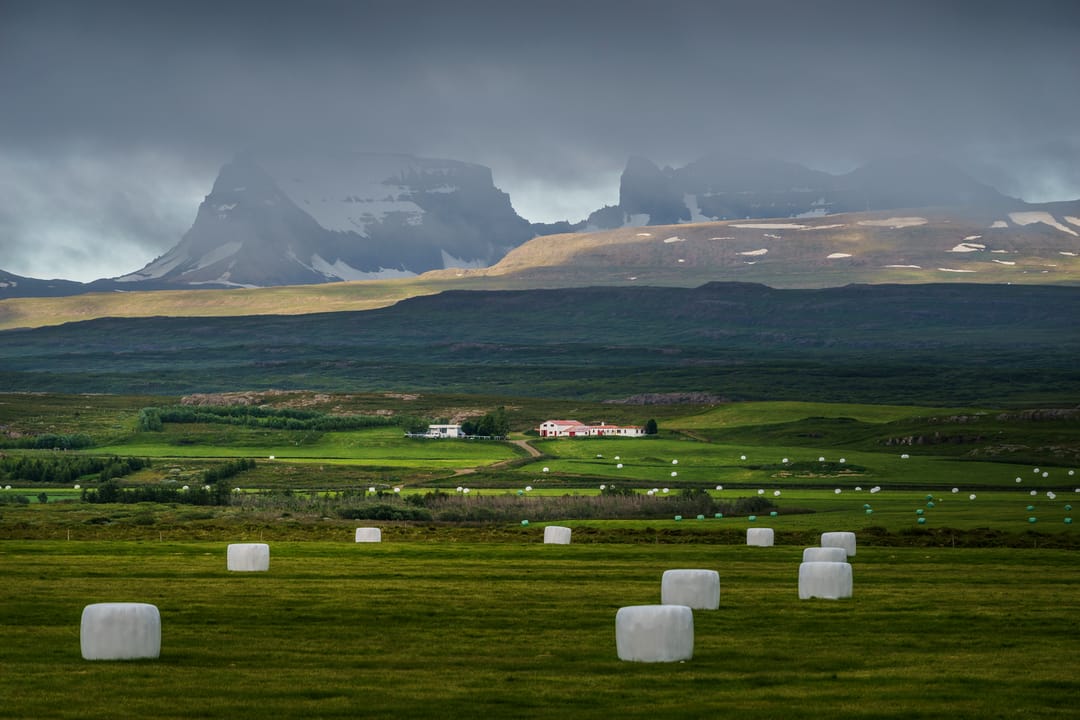
- Borgarfjörður Eystri: A nearby coastal village famous for its picturesque harbour and a viewing platform that allows close observation of nesting puffins in Iceland during summer.
- Seyðisfjörður: This artistic town is known for its brightly painted wooden houses, the iconic Blue Church, and the Rainbow Road.
- Hengifoss Waterfall: One of Iceland's tallest waterfalls, found further south near Lake Lagarfljót, cascades over layers of basalt strata interspersed with red clay.
- Hallormsstaðaskógur: Iceland's largest national forest, offering sheltered walking trails and a contrast to the stark mountain landscape of Dyrfjöll.
Safety and Travel Tips for Visiting Dyrfjöll
Hiking in the Dyrfjöll region requires careful preparation due to its remote location and unpredictable weather.
- Check Conditions: Always check the latest weather, road, and trail conditions, as fog can descend rapidly, and snow persists late into the summer. Visit vedur.is and road.is for the latest information.
- Layer Up: The weather can change drastically between the parking lot and Stórurð. Wear sturdy, waterproof hiking boots with ankle support, and dress in warm, windproof, and waterproof layers.
- Bring Water and Food: Pack ample water and high-energy snacks, as there are no facilities on the trail.
- Stay on the Path: Stick to the marked yellow stakes to protect the fragile moss and vegetation. It’s also crucial to avoid getting lost, especially near the big rocks of Stórurð.
Why Dyrfjöll Is a Must-See in East Iceland
Dyrfjöll offers an unparalleled combination of rugged mountaineering challenge and otherworldly natural beauty. From the panoramic views atop the mountain ridge to the hidden oasis of Stórurð, this range provides a profoundly rewarding experience. For adventurers seeking East Iceland's most dramatic, remote, and photogenic landscape, Dyrfjöll is a must-visit.
FAQs About Dyrfjöll, Iceland
Where are the Dyrfjöll Mountains located?
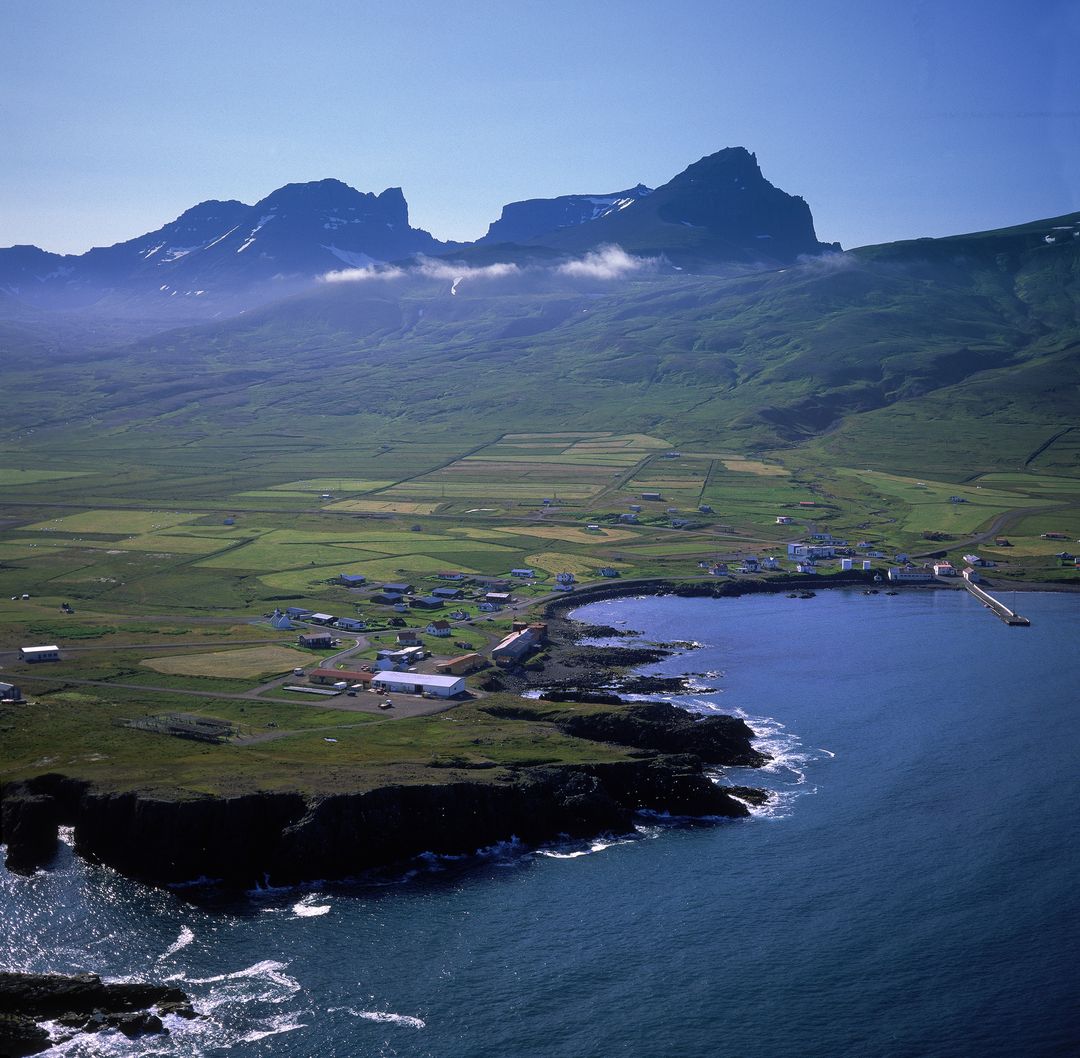
The Dyrfjöll mountains are located in East Iceland, near the village of Borgarfjörður Eystri.
How long to spend at the Dyrfjöll mountain range?
You should allocate a full day (5–7 hours) to complete the round-trip hike to Stórurð, plus travel time.
What is the best time of year to hike in Iceland?
The best time for hiking Stórurð and Dyrfjöll is during summer, when snow has largely melted from the high-altitude trails.
Is the Stórurð hike difficult?
The hike is generally rated as moderate to challenging due to the distance, elevation gain, and the steep, rocky descent into the boulder valley.
Do I need a 4x4 vehicle to reach the Dyrfjöll trailheads?
In summer, a standard 2WD car is usually sufficient for the paved and gravel sections of Route 94 to the trailheads. A 4x4 is highly recommended for shoulder seasons.
Popular articles
The Complete Guide to the Northern Lights in Iceland
Learn how the Northern Lights form, where to see them in Iceland, how to prepare, take photos, read the forecast, and improve your chances of a sighting.
Let's Talk About the Volcano in Iceland About to Erupt
Is a volcano in Iceland about to erupt? Here’s what travelers should know about Svartsengi, Reykjanes activity, flights, safety, and the Blue Lagoon.

Solar Eclipse 2026 in Iceland | What Happened
Iceland experienced a total solar eclipse on August 12, 2026. Discover what happened in Reykjavík, eclipse times, totality locations and more.
September 2026 updates on the Sundhnúkagígar Eruption in the Reykjanes Peninsula!
The current eruption in the Reykjanes Peninsula, is called Sundhnúkagígar Crater Row. See insights on the seismic activity and volcanic eruptions in the area!
Active Volcanoes in Iceland 2026
Active volcanoes aren't the same thing as active eruptions. A volcano can be considered active even when it is not ejecting ash, rock, gases and magma, so which are active in Iceland in 2026?
Top 10 Places To See the Northern Lights in Iceland
Discover the best places to see the Northern Lights in Iceland, from Jökulsárlón and Kirkjufell to Reykjavík, Þingvellir and North Iceland.
Ice Caves From Reykjavik
Planning an ice cave trip from Reykjavik? Compare Katla, Langjökull and Vatnajökull, travel times, seasons and Perlan’s ice cave in the city.